Deleveraging in Crypto: What Falling Open Interest Means for Your Holdings
A sharp drop in Bitcoin’s price with no clear news trigger often has one quiet cause: deleveraging in crypto. Here’s what falling open interest actually means, and how to read it without panicking.
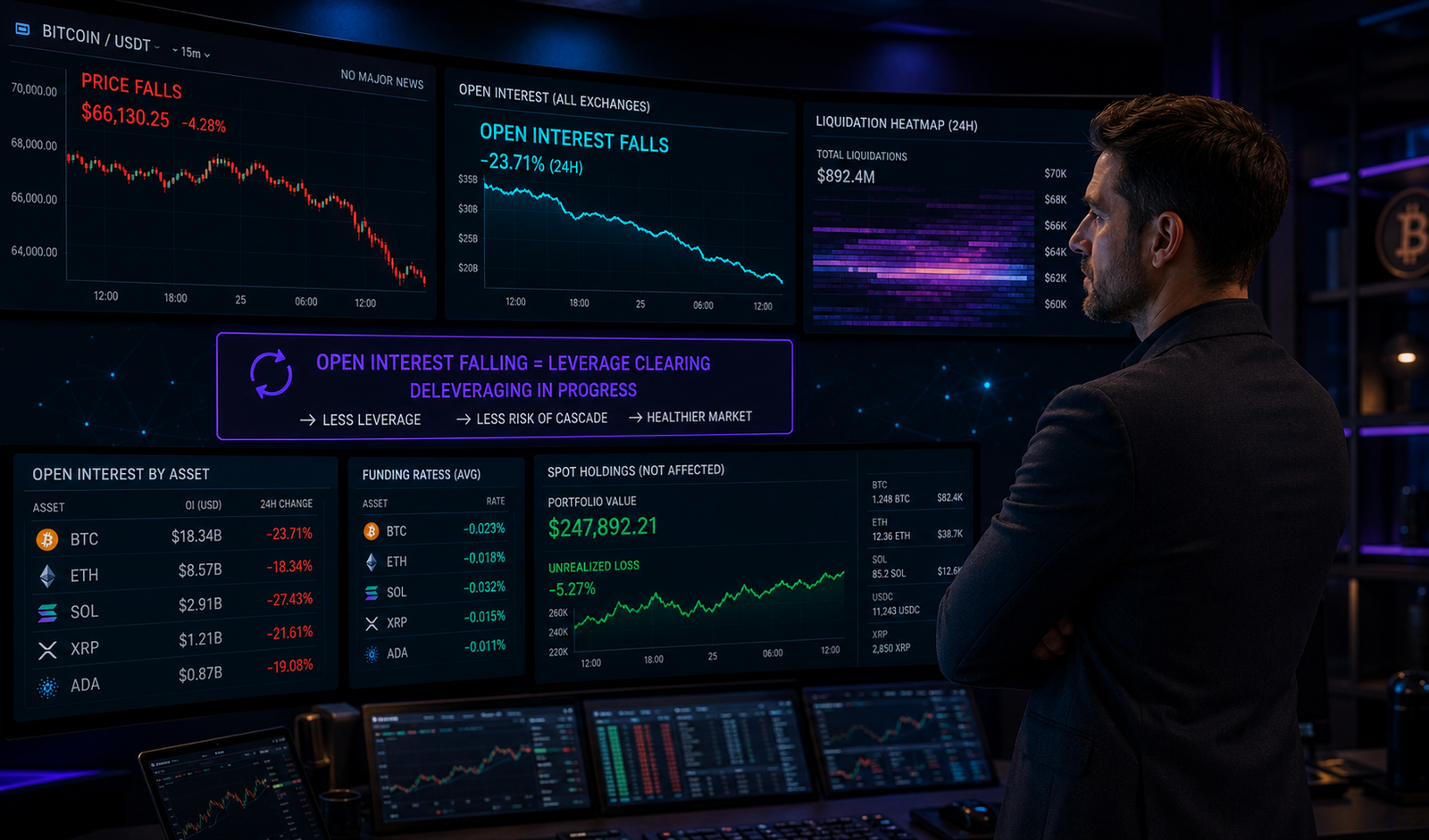
A sharp drop in Bitcoin’s price with no clear news trigger often has one quiet cause: deleveraging in crypto. When leveraged positions unwind at once, open interest falls fast. This article explains what that means, why it happens, and how to read it without panicking.
What Open Interest Actually Tracks
Open interest is not the same as trading volume. According to Coinbase’s explainer on the metric, it tracks the total number of active futures or options positions still open, rather than how many trades happened. Rising open interest means new money is entering the market. Falling open interest means positions are closing.
Open interest measures how much exposure is still standing, not how much trading activity occurred. That distinction is what makes it useful for reading a deleveraging event.
Why Deleveraging Events Happen
Deleveraging happens when traders close out leveraged crypto positions all at once, either voluntarily or through forced liquidation. A sudden price move triggers margin calls, those liquidations trigger more selling, and the cycle feeds itself until enough leverage has been flushed from the system.
Voluntary vs. Forced Deleveraging
Voluntary deleveraging is a trader choosing to reduce risk before things get worse. Forced deleveraging is the exchange closing a position automatically because the trader’s margin dropped below the maintenance requirement. Both push open interest down, but forced deleveraging tends to happen faster and with less warning.
Forced liquidation can happen quickly and without warning once margin falls below the maintenance requirement. Leverage amplifies both gains and losses — treat it accordingly.
Reading Falling Open Interest the Right Way
A drop in open interest during a price decline is often a sign that excess leverage is being cleared out, not that the underlying asset is worthless. Historically, these flush-out events have sometimes preceded periods of price stabilization, since the market has fewer over-leveraged positions left to liquidate.
| Signal | What It Suggests |
|---|---|
| Price falls, open interest falls | Leverage is unwinding; forced selling may be nearing its end |
| Price falls, open interest rises | New short positions are being added; downward pressure may continue |
| Price rises, open interest falls | Short positions closing, not necessarily new buying conviction |
A deleveraging event doesn’t change your actual entry price or cost basis. What it can change is your unrealized profit or loss on paper, which is worth checking rather than guessing at.
The Bottom Line
Deleveraging in crypto is a normal part of how leveraged markets clear excess risk, and falling open interest is simply a signal that positions are closing, not a verdict on an asset’s future.