A trade that shows a 20% gain on paper can still leave you with less real buying power than you started with. Crypto profit vs inflation is a comparison many investors skip, but it changes what a “win” actually means. This article breaks down the difference between a nominal gain and a real return.
Understanding Real Returns vs Nominal Gains
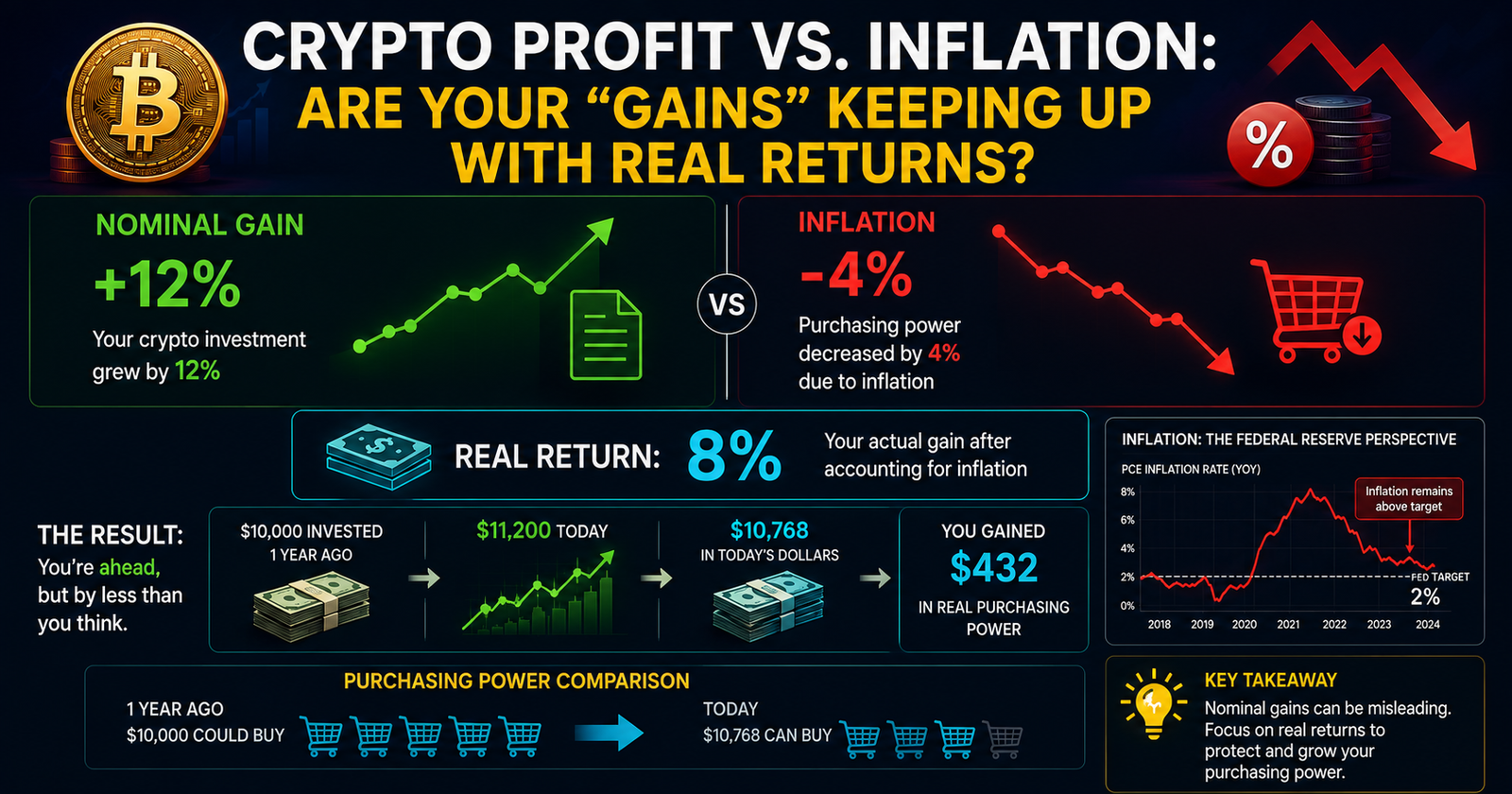
A nominal gain is simply the percentage increase in the dollar value of your position, before accounting for anything else. A real return subtracts inflation from that number to show what you actually gained in purchasing power. The Federal Reserve has noted that inflation remains elevated relative to its 2% target, which means the gap between nominal and real returns has been wider than usual in recent periods.
A gain in dollar terms is not the same as a gain in purchasing power. Real return, not nominal return, is what actually determines whether you came out ahead.
How to Calculate Your Inflation-Adjusted Crypto Profit
Start with your nominal percentage gain, then subtract the inflation rate over the same holding period. What’s left is a rough estimate of your real return.
Realized vs. Unrealized Profit
An unrealized gain exists only on paper until you sell, and inflation keeps eroding its value the whole time you hold. A realized gain locks in a specific dollar amount, which then loses purchasing power at whatever rate prices are rising afterward.
Why the Holding Period Matters
A short holding period usually sees a smaller inflation drag, while a multi-year hold can see inflation quietly cancel out a meaningful share of an otherwise solid nominal gain.
A quick rule of thumb: real return ≈ nominal return − inflation rate. It’s not perfectly precise over long periods, but it’s a fast way to sanity-check whether a gain is actually keeping up with rising prices.
Are Your Crypto Gains Actually Beating Inflation? A Quick Example
Say an investor’s crypto position gained 12% in nominal value over a year. If inflation ran near 4% annually over the same period, the real return comes out closer to 8%, not the full 12% shown on the exchange screen. Historically, periods of elevated inflation have made this gap more noticeable across many asset classes, not just crypto.
| Metric | Value |
|---|---|
| Nominal Gain (1 Year) | +12% |
| Estimated Annual Inflation | ~4% |
| Estimated Real Return | ~8% |
This math is a simplified estimate, not a precise financial calculation. Actual inflation impact depends on your specific holding period, and crypto’s price volatility can swamp inflation effects entirely in either direction.
Use our free Crypto Profit Calculator to see your gain or loss on any trade — no login needed.
Conclusion
Crypto profit vs inflation is worth checking before calling any trade a true win, since a solid-looking nominal gain can shrink once rising prices are factored in. Real returns give a clearer picture of what your gains actually mean.




Comments
No comments yet. Be the first to share your thoughts.
Leave a comment