How Spot Bitcoin ETF Fees Shape Your Profit
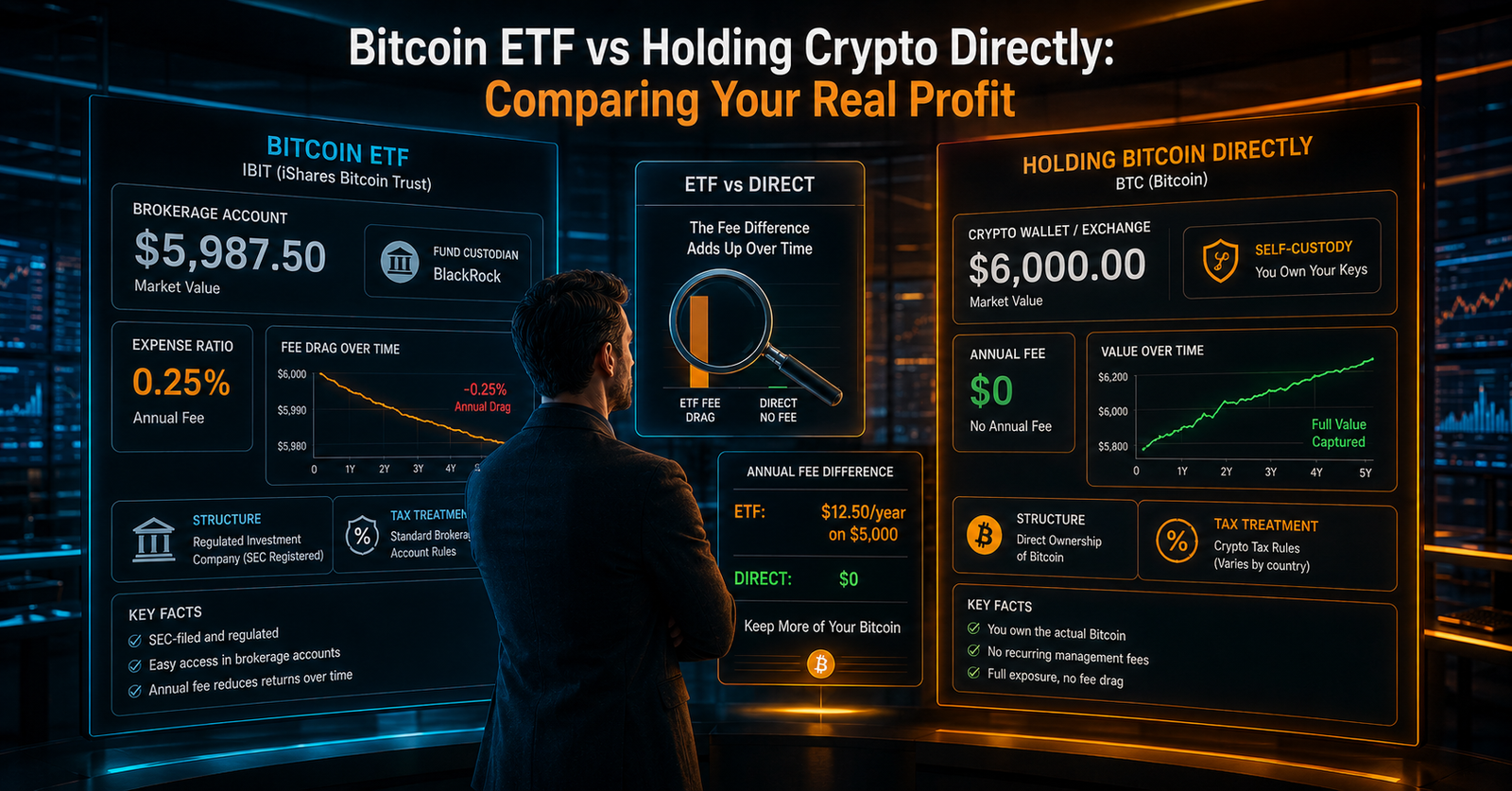
Spot Bitcoin ETFs charge an annual expense ratio that quietly reduces your return every year you hold. Recent SEC-filed fund comparison data shows major funds ranging from around 0.15% to 0.25% a year, while older, higher-cost products have charged as much as 1.5%. That fee comes out of the fund regardless of whether your position gained or lost value, so it’s a permanent drag on ETF profit that direct ownership doesn’t carry.
Major spot Bitcoin ETF expense ratios currently range from about 0.15% to 0.25% annually, compared with legacy trust structures that have charged up to 1.5%.
Comparing Profit Mechanics: ETF Shares vs Direct Crypto Ownership
An ETF share tracks Bitcoin’s price through a fund structure, while direct ownership means the coins sit in your own wallet or exchange account. Both approaches produce a dollar gain or loss when the price moves, but how you access and realize that gain differs.
Realized vs. Unrealized Profit
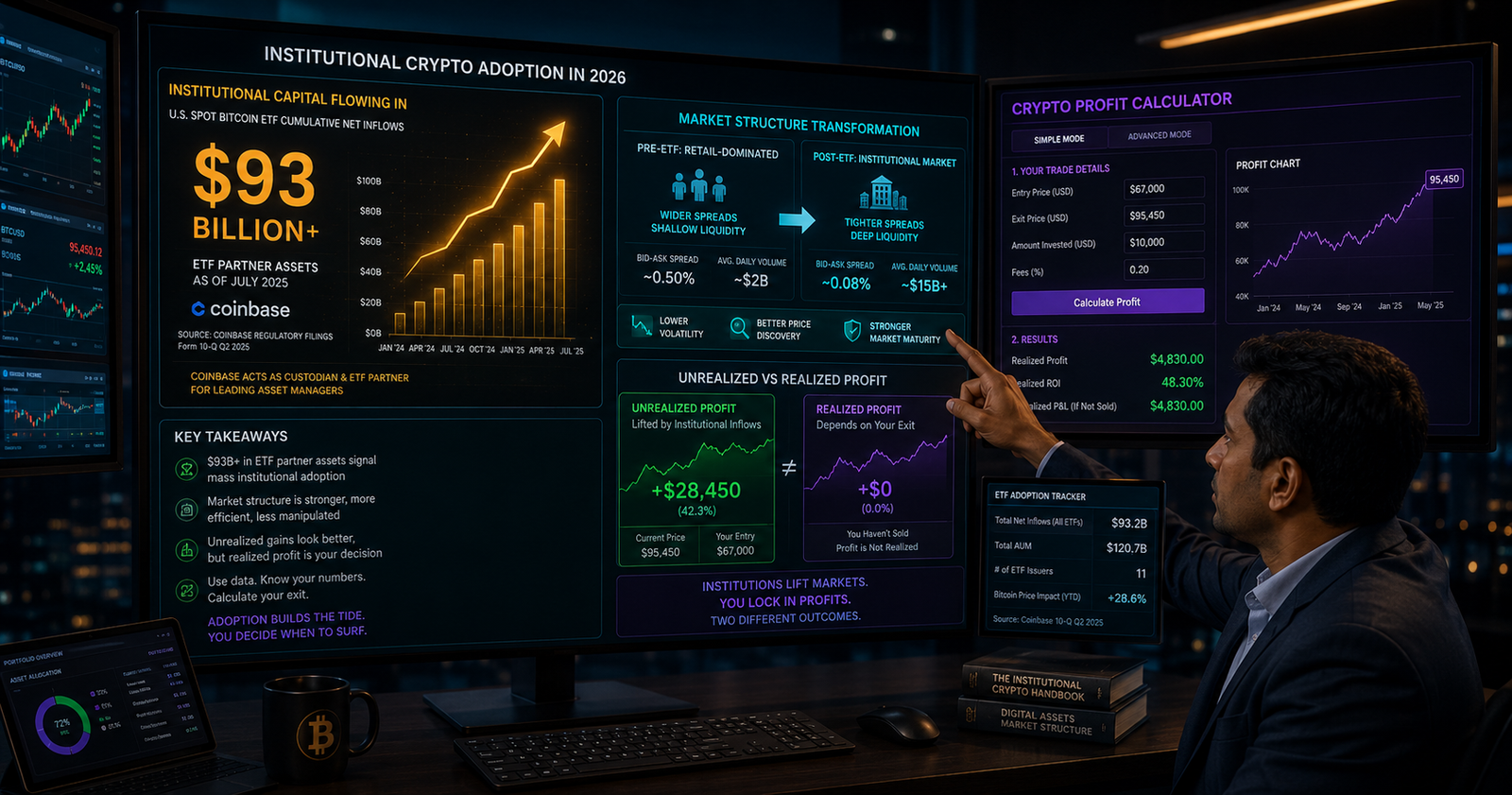
Your profit is unrealized as long as you hold either the ETF shares or the coins, meaning it exists only on paper. It becomes realized profit only once you sell, and at that point the IRS’s digital assets guidance treats gains from crypto as taxable capital gains, and ETF shares are generally taxed the same way, though ETFs may fit more easily into a standard brokerage or retirement account structure.
Profit only becomes real once you sell. Until then, both ETF and direct-crypto gains are unrealized and can still move in either direction before you lock them in.
Real Example: $5,000 in a Bitcoin ETF vs. $5,000 in Direct BTC
Say Bitcoin’s price rises 20% over a year for both positions. The direct BTC position grows to roughly $6,000 before any exchange or network fees. The ETF position also tracks that 20% gain, but a 0.25% annual expense ratio trims about $12.50 off a $5,000 starting balance over the year, landing closer to $5,987.50 before brokerage costs. Small on paper, but that gap compounds the longer you hold.
| Factor | Direct BTC | Spot ETF |
|---|---|---|
| Annual fee | None (network/exchange fees only) | ~0.15%–0.25% typical |
| Custody | Self-managed wallet or exchange | Fund custodian |
| Account type | Crypto exchange/wallet | Standard brokerage account |
A 0.25% expense ratio looks small on a single year, but it compounds. Over a multi-year hold, that annual drag can add up to a meaningfully larger gap versus direct ownership, even before accounting for any price difference between the two.
Neither path guarantees a profit. Bitcoin’s price can fall as easily as it can rise, and both ETF shares and direct holdings will lose value together in a downturn.
Use our free Crypto Profit Calculator to compare your exact profit after fees for any entry price, exit price, and holding period — no login needed.
Conclusion
Choosing between a Bitcoin ETF vs holding crypto directly isn’t just about price exposure — expense ratios, custody, and account type all shape your final number. Neither path guarantees a return, so run your own numbers before deciding.



Comments
No comments yet. Be the first to share your thoughts.
Leave a comment