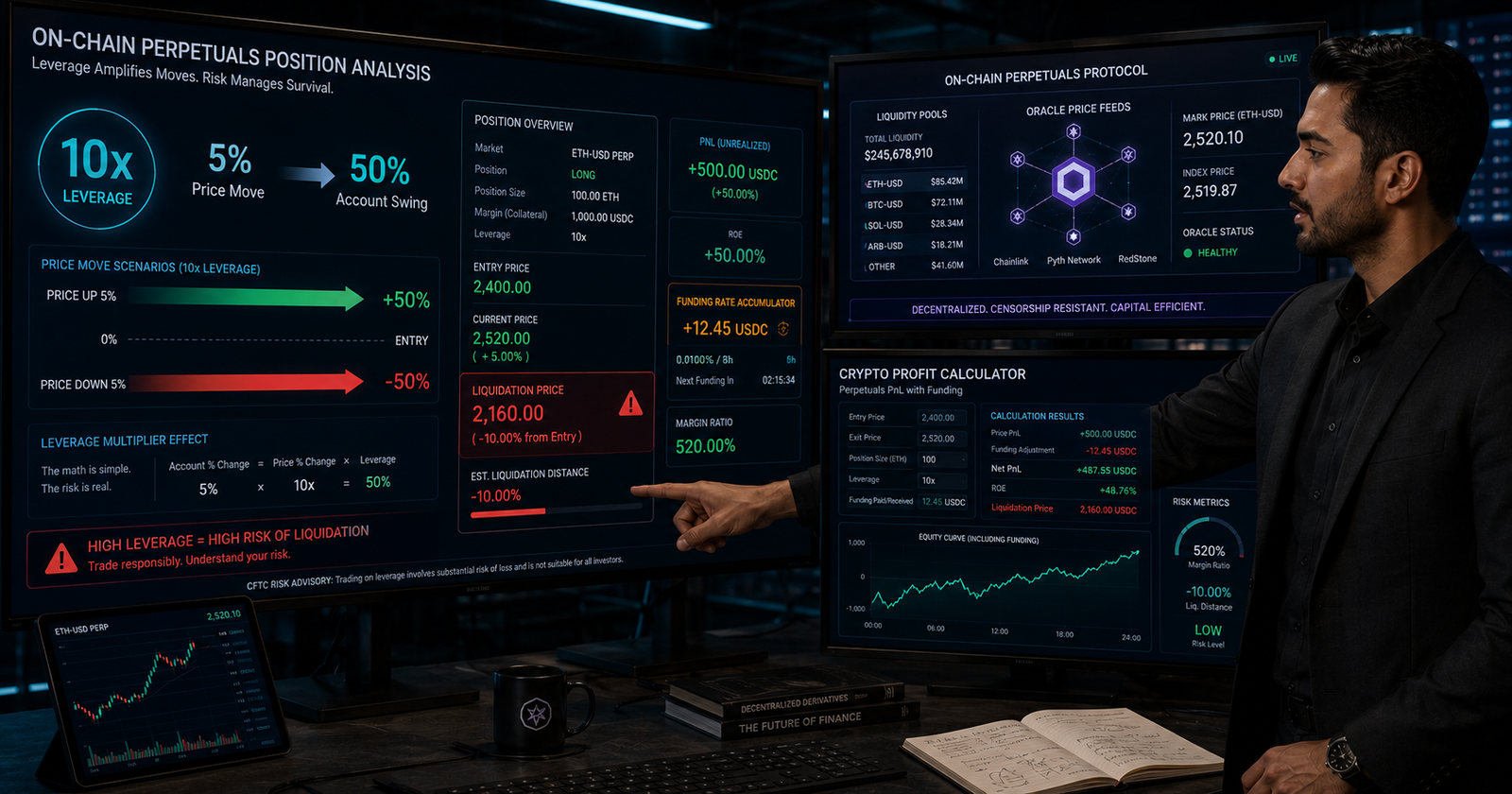
A 10x leveraged position can turn a 5% price move into a 50% swing in your account balance — in either direction. On-chain perpetuals let you take that kind of leveraged exposure directly through a DeFi protocol, no centralized exchange required. This guide breaks down how profit actually gets calculated on these trades and what makes it different from a simple spot buy.
What On-Chain Perpetuals Actually Are
On-chain perpetuals are leveraged trading contracts settled entirely through smart contracts, with no expiration date like traditional futures. Leverage amplifies both gains and losses, and the CFTC’s virtual currency risk advisory notes that margined positions make price swings far more significant to an account balance than an equivalent spot holding. Instead of a centralized order book, these platforms use liquidity pools and oracle price feeds to settle trades.
Leverage magnifies losses as much as gains. A small adverse price move can consume posted margin far faster than it would on an unleveraged spot position.
How Profit Gets Calculated on Leveraged DeFi Trades
Profit on a perpetual position depends on more than just entry and exit price. Two extra factors change the math.
Funding Rate
Perpetuals use periodic funding payments between long and short traders to keep the contract price aligned with the spot price. This cost or credit adds up over time and directly affects net profit.
Liquidation Price
Every leveraged position has a liquidation price — the point where losses consume the posted margin and the position closes automatically, regardless of whether the market later recovers.
Realized vs. Unrealized Profit on Perpetual Positions
An open leveraged position only shows unrealized profit or loss, which moves with every price tick and isn’t locked in until the position closes. Realized profit is what actually lands in the wallet after closing the trade and accounting for funding payments paid or received during the holding period. For example, a position that looks profitable on paper can end up smaller once accumulated funding costs are subtracted, which is why tracking the full picture matters more than watching entry versus current price alone.
Net profit on a perpetual trade = (exit price − entry price) × position size, minus accumulated funding payments and any fees. Unrealized P&L isn’t final until the position closes.
Conclusion
Calculating profit on on-chain perpetuals means going beyond entry and exit price to include funding payments and liquidation risk. Getting the full picture before and during a trade helps set realistic expectations for leveraged DeFi positions.


Comments
No comments yet. Be the first to share your thoughts.
Leave a comment