
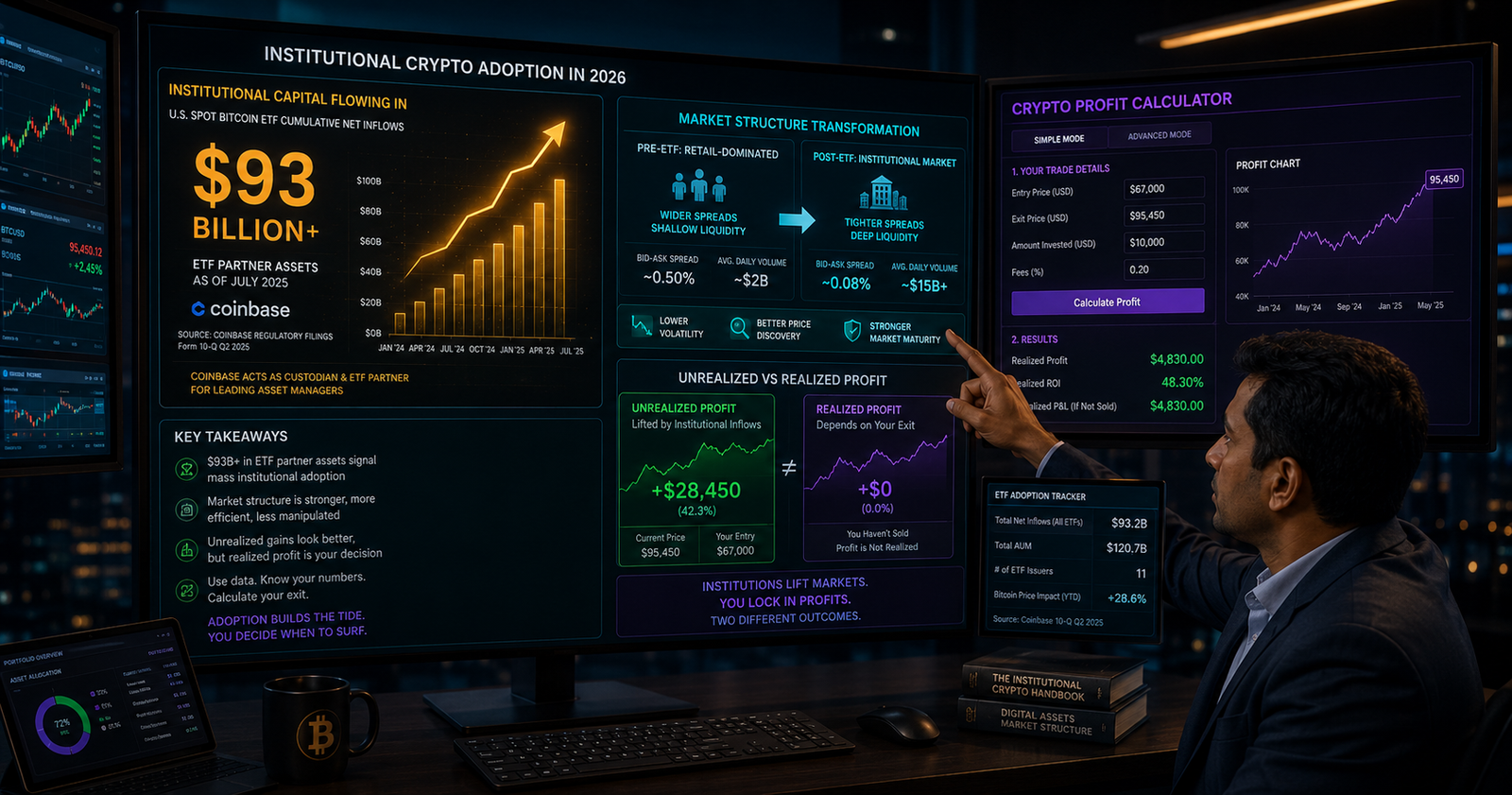
Crypto ETF flows swung sharply in 2026 — from a $2 billion inflow month in April to multi-billion-dollar outflow streaks just weeks later. If you’re wondering whether crypto ETF inflows actually predict crypto profit calculator-style portfolio gains, the short answer is more nuanced than headlines suggest. Here’s what these flows really tell you, and what they don’t.
What Crypto ETF Inflows Actually Measure
ETF inflows track new money entering Bitcoin and Ethereum exchange-traded funds, not the
price of the coins themselves.
CoinGlass’s Bitcoin ETF flow data
shows these funds can see steady outflows even while bitcoin’s price holds flat, since flows
reflect institutional positioning, not a direct vote on value. A single fund like
BlackRock’s IBIT often drives the bulk of daily flow data, which can make the
“market” look more decisive than it actually is.
Bitcoin ETF flows reversed direction multiple times across 2026 — including monthly inflow peaks above $2 billion and weekly outflow streaks topping $1 billion — within the same calendar year.
How ETF Flow Swings Affect Your Portfolio’s Returns
Large inflow streaks don’t guarantee your holdings will rise, and outflow streaks don’t guarantee losses either.
Why Correlation Isn’t the Same as Cause
Historically, sustained ETF inflows have often lined up with price strength, since buying pressure from funds adds real demand. But 2026 also saw weeks where outflows topped $1 billion while prices stayed roughly flat, showing flows are one input among many, not a standalone signal.
What to Watch Instead of Headlines
Rather than reacting to a single day’s flow number, look at multi-week trends alongside your own cost basis and realized gains, since one volatile week rarely changes your actual investment outcome.
How to Use ETF Data Without Overreacting to It
Treat crypto ETF inflow and outflow data as context, not a trading signal on
its own. A 2026 stretch saw bitcoin ETFs swing from $2.44 billion in monthly inflows to a
$1.67 billion weekly outflow within the same year, illustrating how fast institutional
sentiment can reverse. Pair that context with your actual numbers — what you paid, what
you’d gain or lose at today’s price — rather than assuming flow direction predicts your
specific return.
Your realized P&L depends entirely on your own entry price, exit price,
and holding period — not on which way institutional ETF money moved last week. Two
investors holding the same coin can have completely different outcomes based purely on
when they bought.
Treating short-term ETF flow headlines as a trading signal can lead to reactive decisions based on noise rather than your actual financial position. Flow data is sentiment context, not a guarantee of future price direction.
Conclusion: Track Your Numbers, Not Just the Flow Headlines
Crypto ETF inflows and outflows are a useful sentiment indicator, but they’re not a forecast of your personal returns. What matters most for your portfolio is your own cost basis and current value, not which way institutional money moved last week. Use our free Crypto Profit Calculator to see your actual gains or losses regardless of what the ETF headlines say — no login needed.



Comments
No comments yet. Be the first to share your thoughts.
Leave a comment