Calculating net profit after gas fees is the step many beginner traders skip, and it can turn an apparent gain into a much smaller one, or even a loss on very small trades.
Understanding Ethereum Gas Fees and Why They Matter
Gas fees are the cost of getting a transaction processed on a blockchain like Ethereum. Every swap, transfer, or contract interaction uses computing resources, and you pay for that in the network’s native token. A Coinbase Learn guide on gas fees explains that costs rise when network demand is high and fall during quieter periods. Fees vary widely by chain, and even by which layer of a chain you use.
Ethereum mainnet gas costs have dropped sharply since prior years, with simple transfers now commonly running well under a dollar. Layer 2 rollups typically settle for an even smaller fraction of that cost.
Calculating Your Net Profit After Gas Fees
Net profit is not just sell price minus buy price. It also has to account for every fee paid along the way, including gas spent on the buy, the sell, and any swaps in between.
Realized vs Unrealized Profit
Unrealized profit is what a position is worth on paper if you have not sold yet. Realized profit only counts once you actually sell or swap, and that is the number gas fees actually reduce. Track both separately so you always know your true, after-cost return.
Always subtract total fees — not just one leg of the trade — from your gross gain. Buy-side gas, sell-side gas, and any swap fees in between all reduce your realized P&L;.
Net Profit Example Across Ethereum and Layer 2 Chains
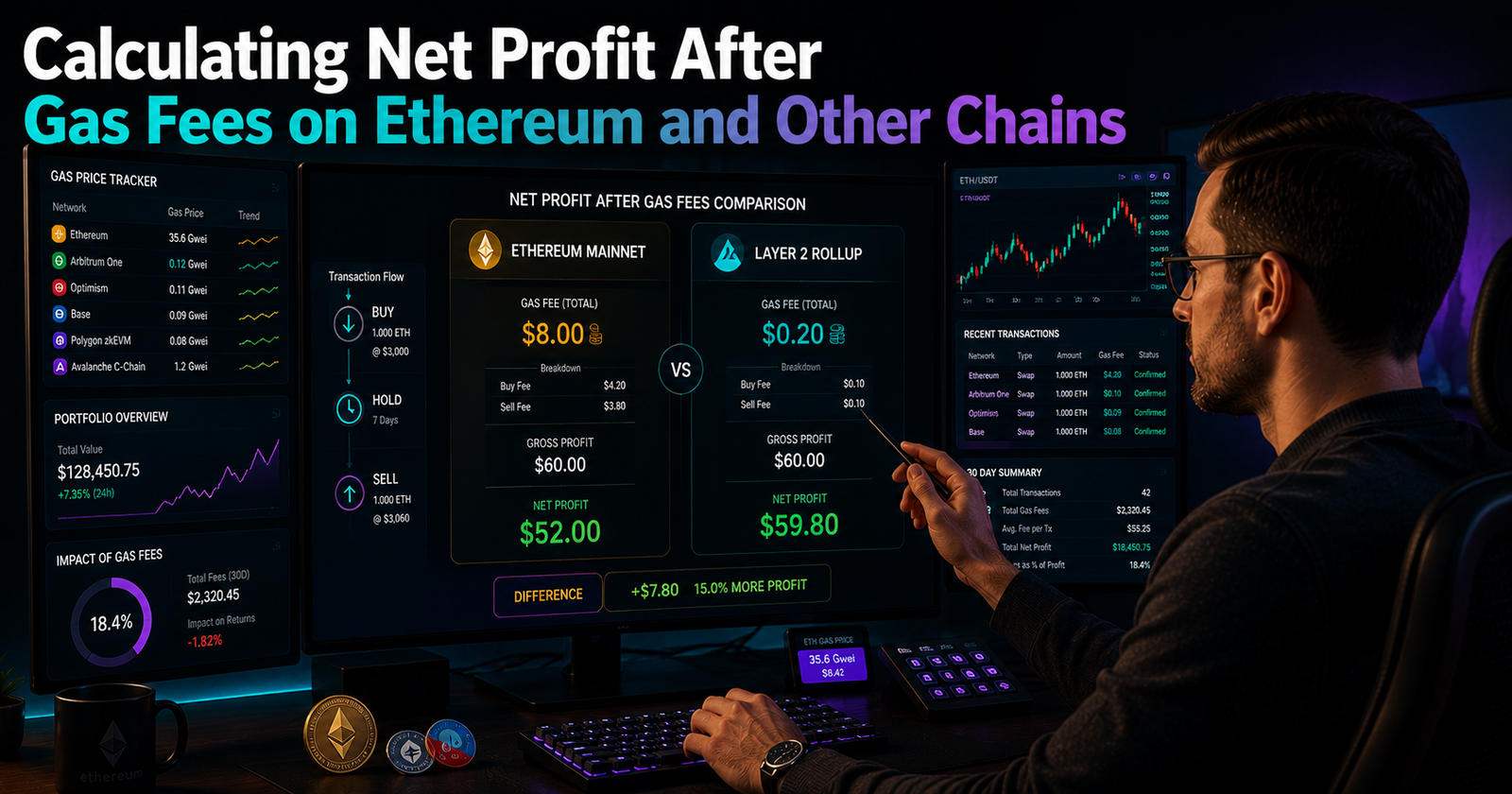
Say you buy $500 of a token on Ethereum mainnet, pay $8 in gas fees for the buy and sell combined, then sell for $560. Your gross profit is $60, but your net profit after gas fees is closer to $52. On a Layer 2 network, where fees are often a small fraction of mainnet costs, that same trade could keep nearly all of its gross profit intact.
| Chain Type | Approx. Gas Cost (Buy + Sell) | Gross Profit | Net Profit |
|---|---|---|---|
| Ethereum Mainnet | $8.00 | $60.00 | $52.00 |
| Layer 2 Rollup | $0.20 | $60.00 | $59.80 |
These figures are illustrative examples, not current network averages. Actual gas costs shift constantly with network demand, so always check live rates before estimating your own trade.
Use our free Crypto Profit Calculator to enter your buy price, sell price, and total fees to see your exact net profit.
Conclusion
Calculating net profit after gas fees gives you a realistic picture of what a trade actually earned, instead of a gross number that ignores network costs. This matters most on smaller trades and on chains with higher fees, where costs can eat into gains quickly. Historical fee data can help you plan, though actual costs shift with network activity.



Comments
No comments yet. Be the first to share your thoughts.
Leave a comment