Spot Holding vs. Futures Trading: Comparing Real Profit Outcomes
Two investors put the same amount into Bitcoin — one buys and holds, the other opens a leveraged futures position. A year later, their outcomes can look nothing alike.
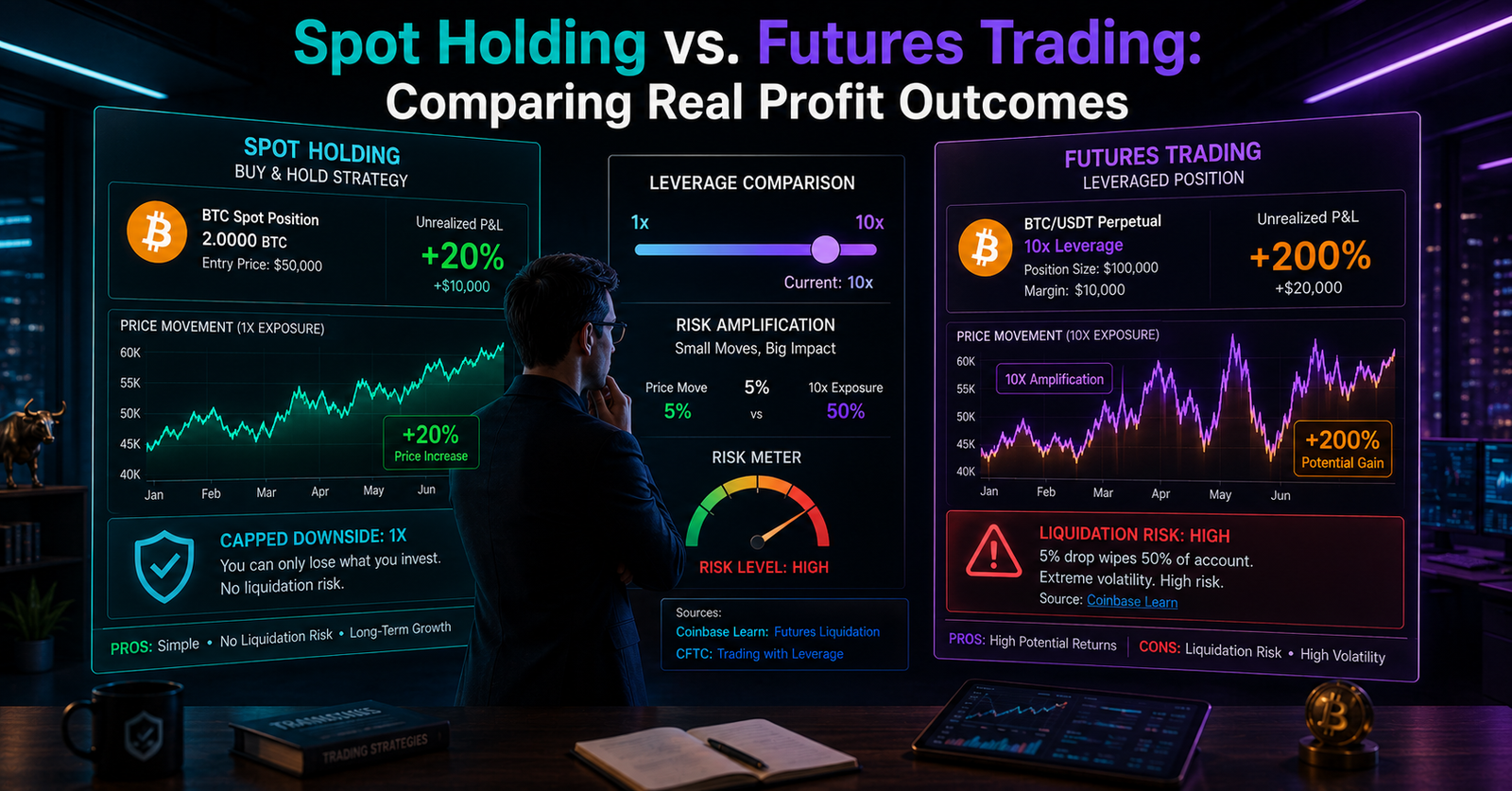
This article compares spot holding vs futures trading so you can see how each path actually affects real profit, not just theoretical upside.
Spot Holding and Leverage Trading Risk: The Core Difference
Spot holding means you own the asset outright after paying the full price. Your profit or loss moves one-to-one with the price. Futures trading uses borrowed capital, or leverage, to control a larger position with less money down.
The CFTC’s advisory on virtual currency trading notes that leverage amplifies both gains and losses, and traders can end up owing more than their original deposit.
How to Compare Realized vs Unrealized Profit
A profit only becomes real money when you close the position. Until then, it’s just a number on a screen that can shrink or vanish.
Unrealized Profit on Spot Holdings
If BTC rises 20% and you’re still holding, that 20% gain is unrealized. It only locks in once you sell.
Realized Profit on Futures Positions
Futures profits can be realized faster because positions often close automatically at a set price. But losses can also be realized just as fast through liquidation.
Is Spot or Futures Trading More Profitable? A Simple Example
Picture $1,000 invested in Bitcoin two ways. The spot buyer sees their position rise and fall exactly with the price, gaining or losing based on the raw percentage move.
The futures trader using 10x leverage sees that same percentage move multiplied by ten — a 5% drop wipes out half the account, as described in Coinbase Learn’s guide to crypto futures trading.
| Scenario | Price Move | Account Impact |
|---|---|---|
| Spot Holding | -5% | -5% |
| Spot Holding | +5% | +5% |
| 10x Futures | -5% | -50% |
| 10x Futures | +5% | +50% |
Conclusion
Comparing spot holding vs futures trading comes down to how much risk matches your goals. Spot holding offers simpler, capped downside, while futures trading can multiply both gains and losses fast.