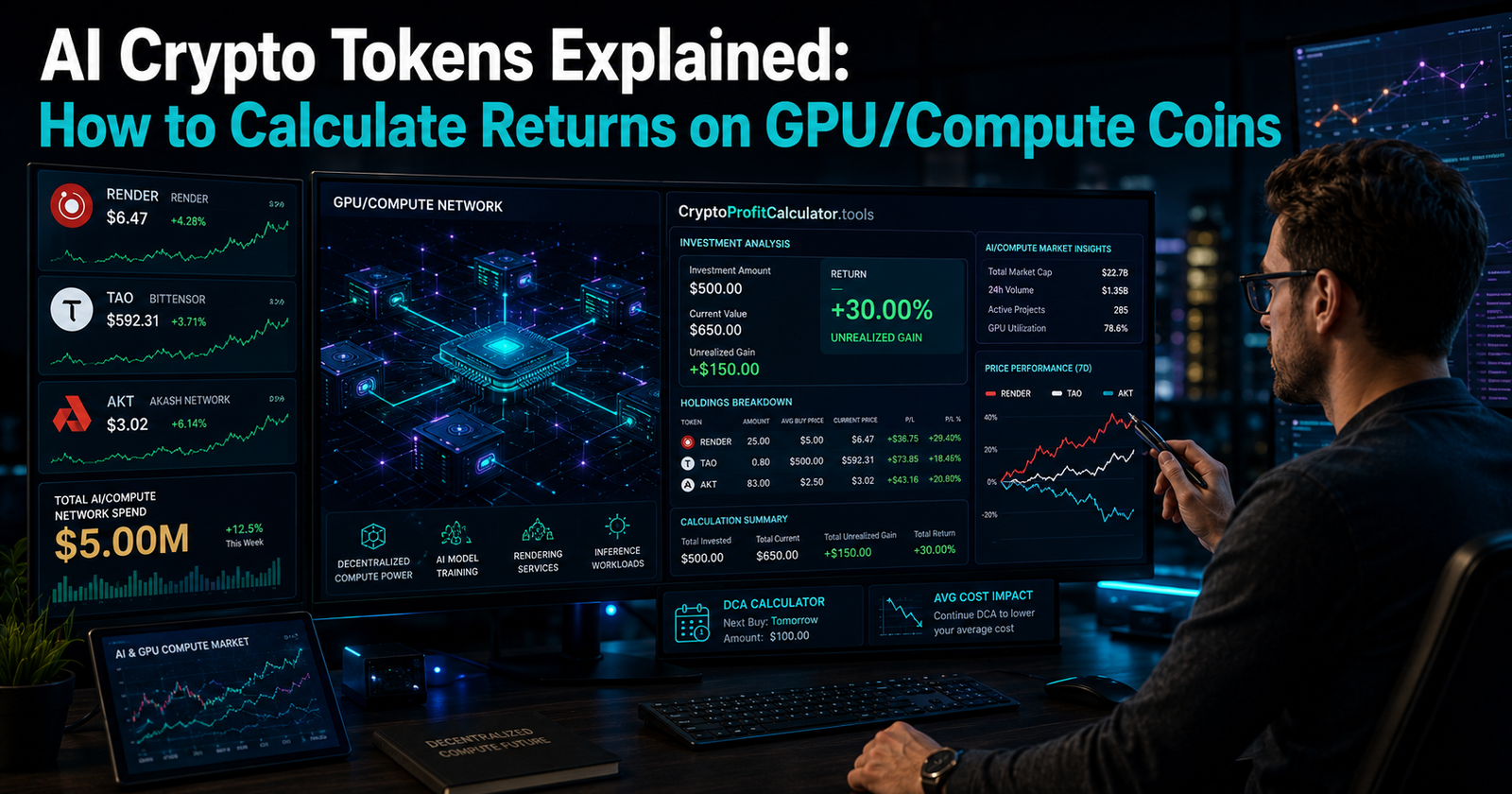
AI crypto tokens like Render and Akash let you rent out spare GPU power for AI work instead of just holding a speculative asset. Here’s how to actually calculate what your returns look like.
What Makes GPU Compute Coins Different
GPU compute coins power decentralized networks where anyone can contribute hardware and earn tokens, instead of routing everything through AWS, Google Cloud, or Azure. Akash Network recorded a record $5 million in compute spend during Q1 2026, showing real usage behind the token, not just speculation. For a plain-language breakdown of how these marketplaces work, see Coinbase Learn’s guide to crypto infrastructure projects.
Akash Network recorded a record $5 million in quarterly compute spend in Q1 2026 — a sign of real network usage behind the token, separate from price speculation.
How to Calculate Returns on AI Crypto Tokens
Treat AI crypto tokens like any other crypto position: track your cost basis, current value, and realized versus unrealized gains separately.
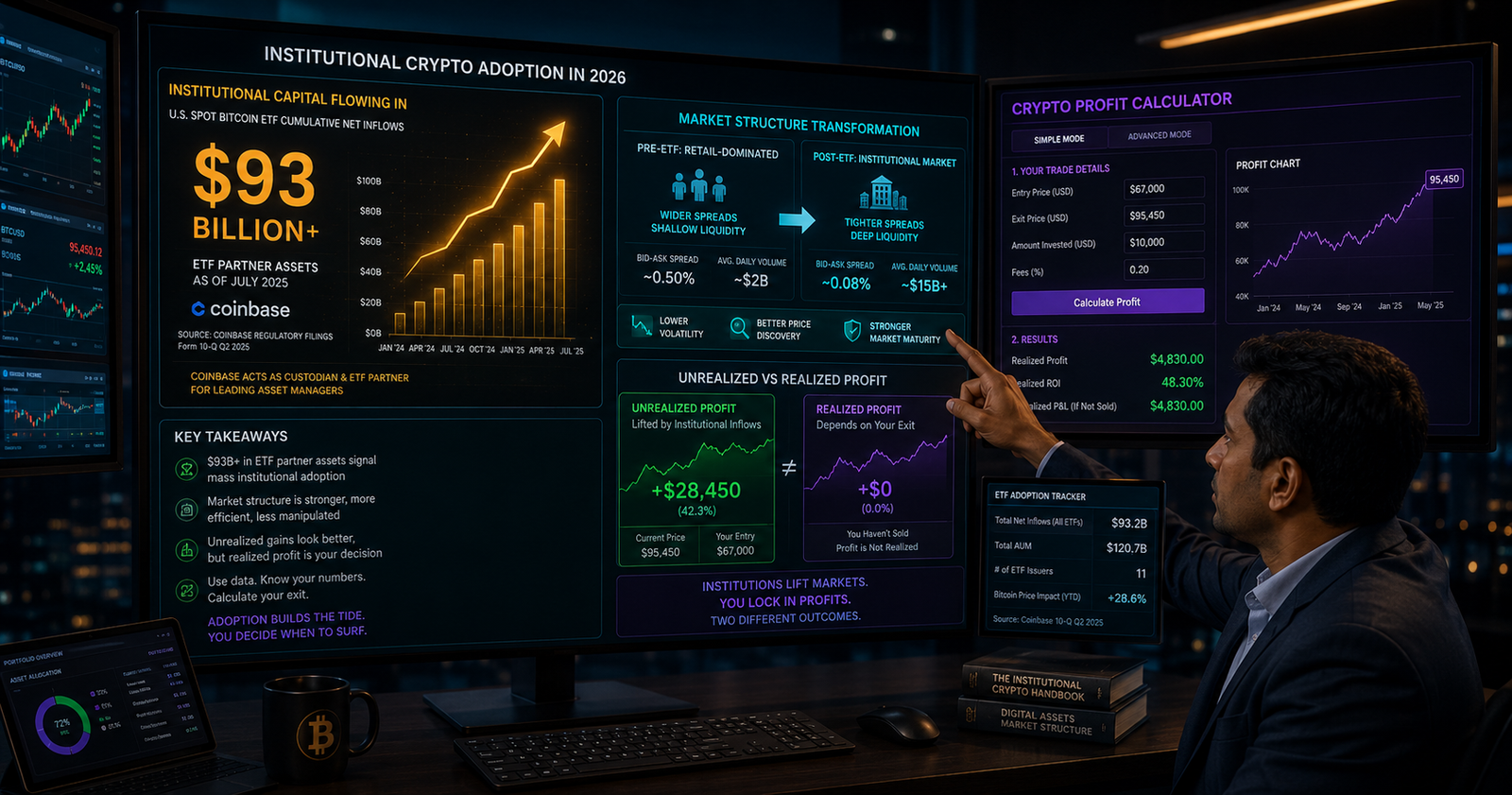
Realized vs. Unrealized Profit
- Unrealized profit: The paper gain on tokens you still hold — it only reflects current market price, not cash in hand.
- Realized profit: What you actually locked in after selling, converting, or spending the tokens.
Your return formula stays simple: (current value − total invested) ÷ total invested × 100 = percentage return. This works the same whether you’re holding RENDER, TAO, or AKT.
A Practical Example Calculating Compute Coin Returns
Say you bought $500 of a GPU compute coin across several purchases, and your holdings are now worth $650. Your unrealized gain is $150, or 30%. If you sell half and keep the rest, only the sold portion becomes a realized gain — the remainder still floats with the market. This distinction matters most with tokens like Bittensor, whose circulating supply data is tracked in real time on CoinGecko, since scarcity can amplify price swings in both directions.
| Metric | Value |
|---|---|
| Total invested | $500 |
| Current value | $650 |
| Unrealized gain | +$150 (30%) |
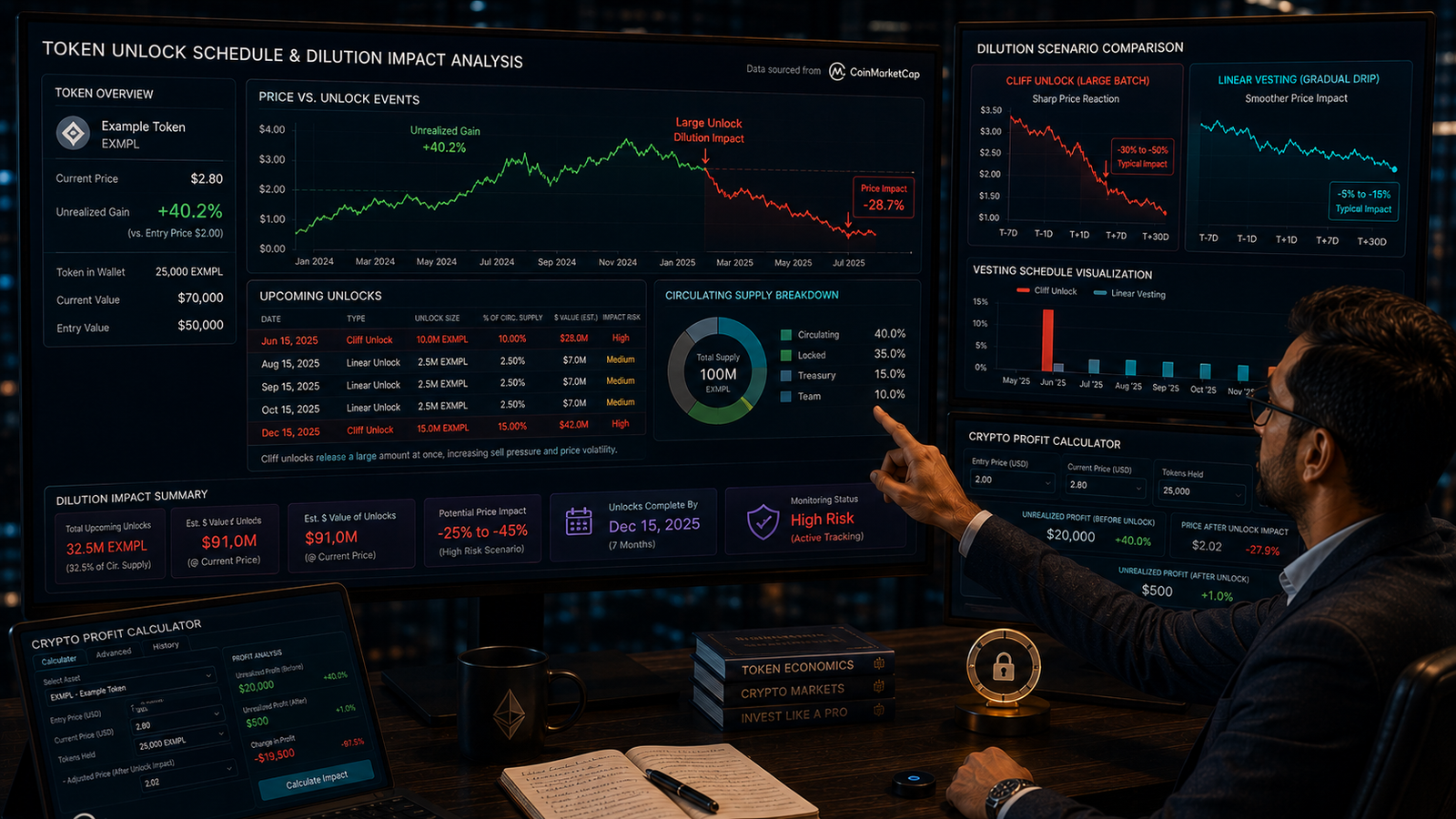
Historical usage growth in decentralized compute networks does not guarantee future returns. AI crypto tokens can be highly volatile, and a rising cost basis works the same way in reverse during a downturn.
Conclusion: Track AI Crypto Tokens Like Any Other Position
AI crypto tokens tied to real GPU usage give you more to evaluate than pure hype coins, but the math behind your returns doesn’t change. Track your cost basis, separate realized from unrealized gains, and remember that historical usage growth doesn’t guarantee future returns.
Comments
No comments yet. Be the first to share your thoughts.
Leave a comment