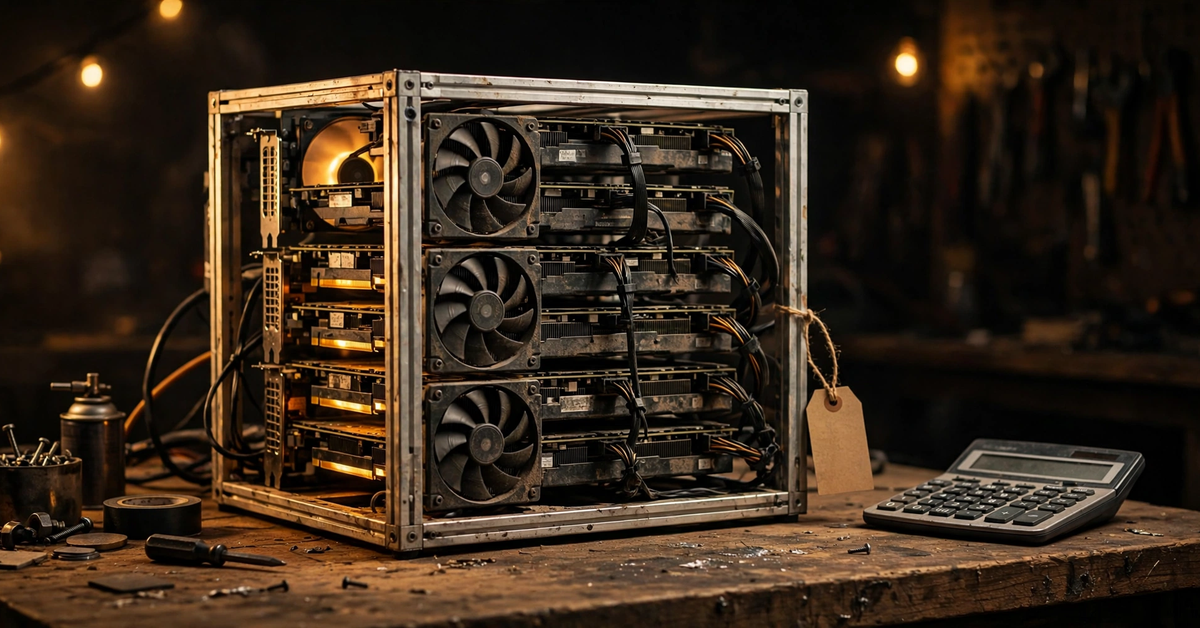
Selling a Used Mining Rig: How to Calculate Your Real Profit
A used mining rig can look like an easy win. You bought it, ran it for a year, and now someone is offering a decent price for it. Before you accept, work out whether you actually made money, because the sale price alone tells only part of the story.
Real profit is not resale price minus purchase price. It is everything the rig earned, plus the sale price, minus every cost of owning and selling it. Leave out electricity, fees, or repairs and a losing deal can look profitable.
What Counts as Profit on a Rig Sale
Think of a mining rig as a small business with two income streams: the crypto it mined while you owned it, and the cash you receive when you sell the hardware. Both belong on the income side of the ledger.
On the cost side, the purchase price is usually the biggest item, but rarely the only one. Electricity surprises most sellers, followed by pool fees, replacement parts, and the fees and shipping involved in the sale.
The Full Formula for Rig Sale Profit
Add up all proceeds, add up all costs, and subtract:
Net profit = (mined crypto value + resale price) − (purchase price + electricity + maintenance + selling fees + shipping)
ROI puts that profit in context. Divide net profit by the purchase price and multiply by 100; a positive result means the rig paid for itself and then some.
Key takeaway: A rig sale is only profitable if mined coins plus resale price exceed the purchase price and every running and selling cost combined.
Electricity: The Cost Sellers Underestimate
Work electricity out from your actual bill, not a wattage estimate alone. Multiply average power draw by hours run, then by your price per kilowatt-hour, including cooling fans. A rig running around the clock pays the average of all your tariff rates, not just the cheap overnight figure.
Fees, Repairs, and Other Hidden Costs
Pool fees are a small percentage of rewards, but over twelve months they add up, as do replacement fans and risers. A 5% marketplace fee on a $2,800 sale is $140 off the top, and insured shipping for a heavy rig can cost $75 or more. Downtime matters too: every idle week was a week of coins never mined.
Worked Example: A $6,000 Rig Run for 12 Months
Suppose you bought a rig for $6,000, ran it twelve months, sold mined coins for $6,200, then sold the rig for $2,800. Electricity cost $150 a month, parts $150, plus a $140 marketplace fee and $75 shipping:
| Item | Amount |
|---|---|
| Mined crypto (sold value) | $6,200 |
| Resale price | $2,800 |
| Gross proceeds | $9,000 |
| Purchase price | ($6,000) |
| Electricity (12 months × $150) | ($1,800) |
| Maintenance and parts | ($150) |
| Marketplace fee (5% of resale price) | ($140) |
| Shipping and packaging | ($75) |
| Total costs | $8,165 |
| Net profit | $835 |
| ROI on rig purchase price ($835 ÷ $6,000) | 13.9% |
The seller walks away $835 ahead, a 13.9% return on the original $6,000 — but had electricity cost $200 a month, profit would have fallen to $235.
Key takeaway: Electricity is usually the deciding factor — in this example, a $50 monthly rise in power costs would have wiped out more than two-thirds of the profit.
Common Mistakes When Pricing a Used Rig
The most common mistake is counting the resale price as profit. It is only a partial recovery of the purchase price. Another is valuing mined coins at their all-time high rather than the price available today, which can lead you to accept a low offer you did not need to take.
Some sellers also forget tax, which varies by location for mined income and hardware gains. And if the rig still earns more than it costs to run, selling for a quick payout may cost more in lost earnings than you gain. See our guide on calculating profit on mining rewards, sell monthly vs hold and our Bitcoin ATM sales, fee and spread math example. For valuing coins still held, CoinGecko's Bitcoin price page is a useful reference.
How to Use This Calculation Before You Sell
Run the numbers before you list the rig, not after you accept an offer. Gather your purchase receipt, electricity costs, pool payout records, and repair receipts, then set a minimum sale price: the resale figure at which net profit hits zero. Any offer below it means a loss on the full picture. Also re-run the calculation 20% below today's coin price if you still hold the coins.
Run your own numbers in the crypto profit calculator before you list your rig, so your asking price is based on real profit, not guesswork.
Conclusion
Selling a used mining rig profitably comes down to honest bookkeeping. Add mined coins and resale price, subtract purchase price, electricity, maintenance, fees, and shipping, and you have your real profit. In our example that meant $835 on a $6,000 rig over twelve months, a 13.9% return. Do the maths first, set your minimum price, and let the numbers decide.
Disclaimer: This article is for educational purposes only and is not financial advice. Mining profitability depends on coin prices, network difficulty, electricity rates, and hardware condition, all of which can change. Do your own research before making investment or selling decisions.



Comments
No comments yet. Be the first to share your thoughts.
Leave a comment